The Ancient Origins of Gematria: From Babylon to Modern Practice
Introduction: Unveiling the Hidden Language of Numbers
In the shadowy corridors of ancient history, where mathematics and mysticism intertwined, a fascinating practice emerged that would forever alter how humans perceive the relationship between language and numbers. This practice—gematria—transcends mere calculation, offering a window into how our ancestors discovered profound connections between words and their numerical values. Far from being a simple curiosity of the past, gematria has survived millennia, evolving from its ancient Babylonian roots to become a vibrant component of modern spiritual practice.
The word “gematria” itself carries a storied etymology, deriving from the Greek word “geometria” (geometry), though its practice predates Greek civilization by centuries. At its core, gematria involves assigning numerical values to letters, allowing practitioners to uncover hidden meanings in sacred texts, names, and concepts. This ancient system creates a bridge between the written word and mathematical symmetry, revealing patterns that might otherwise remain concealed.
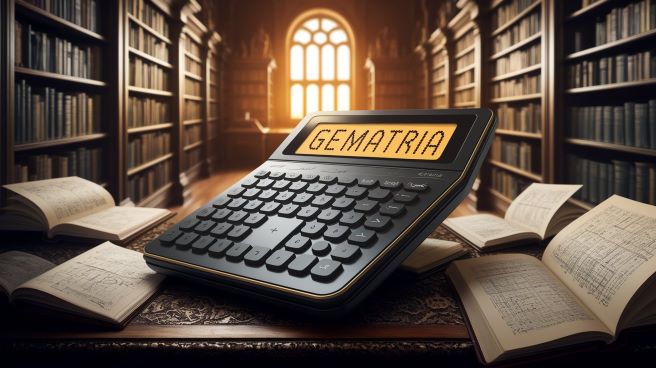
As we embark on this journey through time, we’ll trace gematria’s fascinating evolution from the clay tablets of Mesopotamia to the digital calculators of today. Whether you’re a seasoned numerologist or simply curious about this ancient art, understanding gematria’s historical foundations provides essential context for appreciating its enduring significance in our modern world.
Babylonian Beginnings: The Cradle of Numerical Symbolism
The fertile crescent between the Tigris and Euphrates rivers—ancient Mesopotamia—served as the birthplace for many human innovations, including the earliest precursors to gematria. In this cradle of civilization, the sophisticated Babylonians developed one of history’s first advanced numeral systems alongside their complex cuneiform writing.
The Sargon Code and Early Mesopotamian Number Systems
Archaeological evidence from approximately 2600 BCE suggests that Babylonian scholars developed a system known as the “Sargon Code,” where words and names could be represented by numbers. This proto-gematric system represented a revolutionary fusion of linguistic and mathematical thinking.
The Babylonians operated using a sexagesimal (base-60) number system—a mathematical approach so effective that we still use its vestiges when measuring time and angles today. Within this system, they began associating deities with specific numbers, creating one of history’s first documented instances of attributing numerical values to metaphysical concepts.
Babylonian Astronomer-Priests and Sacred Mathematics
In Babylon, astronomy, mathematics, and religion weren’t separate disciplines but rather interconnected aspects of understanding the cosmos. The astronomer-priests of ancient Babylon meticulously recorded celestial movements, creating mathematical tables that correlated heavenly bodies with specific numerical values.
The Babylonian deity Marduk, for instance, was associated with the number 10, while the moon god Sin corresponded to 30. These associations weren’t arbitrary but reflected astronomical observations and religious significance. The tablet known as “Plimpton 322” demonstrates the Babylonians’ sophisticated mathematical understanding, showcasing their ability to calculate what we now recognize as Pythagorean triples—well before Pythagoras himself.
Biblical scholar and historian Robert Graves notes that this Babylonian practice of assigning numerical values to deities “created a framework where mathematics served not just practical calculation but provided access to divine mysteries.” This fusion of the numerical and the numinous would profoundly influence neighboring cultures, particularly the Hebrews during their Babylonian exile.
Hebrew Gematria: The Refinement of an Ancient Science
While Babylonian systems provided the conceptual foundation, it was within Hebrew tradition that gematria found its most sophisticated early expression and systematic application. As Jewish scholars encountered Babylonian mathematical concepts during the Exile period (6th century BCE), they adapted these practices to their own alphabet and religious texts.
Development of the Mispar System
The Hebrew language, with its 22-letter alphabet, proved particularly conducive to gematric interpretation. Each Hebrew letter was assigned a specific numerical value—Aleph (א) equals 1, Bet (ב) equals 2, and so forth. This standardized system, known as Mispar Hechrechi (standard value), became the foundation for Hebrew gematria.
Over time, multiple calculation methods developed within this tradition:
- Mispar Gadol: Counts the final forms of Hebrew letters differently
- Mispar Katan: Reduces all numbers to single digits
- Mispar Siduri: Uses ordinal values rather than traditional numerical assignments
- Atbash: Employs a substitution cipher where the first letter is replaced with the last
These varied approaches provided different lenses through which scholars could examine sacred texts, particularly the Torah.
Gematria in the Dead Sea Scrolls
The discovery of the Dead Sea Scrolls in the mid-20th century provided remarkable evidence of gematria’s importance in Second Temple Judaism. Several fragments from Qumran contain clear gematric calculations alongside religious commentary, demonstrating that by the 2nd century BCE, gematria had become an established hermeneutical tool.
Scroll 4Q252, for example, contains numerical analyses of biblical names that scholars have identified as gematric calculations. These findings suggest that the Essene community—believed to be responsible for the scrolls—used gematria as a method for discovering hidden meanings within their sacred texts.
Greek Influence: The Mathematical Mysticism of Pythagoras
As gematria evolved in the Near East, parallel developments were unfolding in Greece through the work of Pythagoras and his followers. The Pythagorean school, established in southern Italy around 530 BCE, established philosophical principles that aligned remarkably with gematric thinking.
Pythagorean Number Philosophy
For Pythagoras, numbers weren’t merely quantitative tools but possessed qualitative aspects that revealed fundamental truths about reality. His famous dictum “all is number” reflected a belief that mathematics underpinned the cosmos’s structure. Each number carried specific attributes and cosmic significance:
- One represented unity and the divine source
- Two symbolized duality and the material world
- Three represented harmony and the resolution of opposites
- Four signified stability and earthly elements
This attribution of metaphysical qualities to numbers created a philosophical framework that readily accommodated gematric thinking when Greek culture later encountered Jewish traditions.
The Isopsephy System
The Greek equivalent to Hebrew gematria, known as isopsephy, assigned numerical values to the 24 letters of the Greek alphabet. Alpha (α) equaled 1, Beta (β) equaled 2, and so forth, with higher values for later letters.
Greek poets and philosophers employed isopsephy to create acrostics and number puzzles that conveyed deeper meanings. The Greek anthology contains numerous examples of poems where words were carefully chosen to create specific numerical values, demonstrating how deeply this practice had penetrated Hellenistic culture.
Gematria in Religious Texts: Sacred Calculations
As gematria matured as a discipline, it found its most significant application in the interpretation of religious texts across multiple traditions. Far from being a mere intellectual exercise, gematria offered believers ways to uncover layers of meaning beyond the literal text.
Torah Analysis and Rabbinic Literature
Within Jewish tradition, gematria became one of the primary exegetical tools of rabbinic scholarship. The Talmud contains numerous examples of rabbis employing gematric analyses to resolve textual difficulties or extract additional meanings from Torah passages.
One famous example concerns the 318 servants mentioned in Genesis 14:14. Rabbinic commentators noted that the numerical value of “Eliezer” (אליעזר)—Abraham’s servant—equals 318, suggesting that this single trusted servant might have been equivalent to an entire army through divine assistance.
The medieval period saw gematria reach new heights of sophistication in works like the Sefer Yetzirah (Book of Formation) and later kabbalistic texts. Rabbi Moses ben Nachman (Nachmanides) employed gematria extensively in his Torah commentary, finding numerical patterns that revealed connections between seemingly unrelated passages.
New Testament Connections
While less explicitly acknowledged, gematria also appears within Christian contexts. The most famous example occurs in the Book of Revelation 13:18, which states: “Here is wisdom. Let him that hath understanding count the number of the beast: for it is the number of a man; and his number is Six hundred threescore and six.”
This passage (referring to 666) has generated centuries of gematric speculation regarding the identity of the “beast.” Numerous historical figures have been proposed based on gematric calculations of their names in various languages. Early Christian communities, particularly those with Jewish roots, would have recognized this as a clear invitation to apply gematric methods.
Medieval Developments: Kabbalah and Beyond
The medieval period witnessed gematria’s greatest flowering, particularly within the mystical Jewish tradition of Kabbalah. As esoteric wisdom spread throughout Europe and the Middle East, gematria became increasingly sophisticated.
Kabbalistic Innovations
The emergence of Kabbalah in 12th-century Provence and Spain revolutionized gematria’s application. Kabbalists viewed the Hebrew language as inherently sacred—the very instrument God used to create the world. Within this framework, gematria became not just an interpretive tool but a method for understanding creation itself.
The Zohar, Kabbalah’s central text, contains numerous gematric interpretations linking divine attributes (sefirot) with their numerical expressions. The gematric value of “wisdom” (חכמה, Chokhmah) equals 73, which corresponds to the value of “life” (חיים, Chaim)—suggesting an essential connection between divine wisdom and the life force.
Rabbi Abraham Abulafia (13th century) developed meditative practices centered around gematria, believing that contemplating these numerical relationships could induce prophetic states and mystical experiences. His system of “prophetic Kabbalah” used gematria not just as an analytical tool but as a spiritual technology for achieving altered consciousness.
Cross-Cultural Exchange
As Jewish communities interacted with Islamic and Christian scholars during the medieval period, gematria concepts spread across cultural boundaries. Islamic abjad numerals developed as a parallel system, while Christian Kabbalists like Johannes Reuchlin and Pico della Mirandola incorporated Hebrew gematria into Renaissance thought.
The 16th-century scholar Rabbi Judah Loew ben Bezalel (the Maharal of Prague) systematized gematria into a comprehensive philosophical approach, arguing that numerical relationships revealed divine patterns embedded in creation. His work represents gematria’s intellectual pinnacle, elevating it from a calculation method to a complete metaphysical system.
Renaissance to Modern Era: Evolution and Adaptation
As Europe entered the Renaissance, gematria traveled beyond religious contexts into secular intellectual circles. Occult philosophers and early scientists alike found value in exploring numerical patterns within language.
Occult Philosophy and Western Esotericism
Heinrich Cornelius Agrippa’s influential work “Three Books of Occult Philosophy” (1531) incorporated extensive gematric principles drawn from Hebrew traditions. His systematic approach helped integrate gematria into Western esoteric thought, influencing subsequent generations of scholars.
The Hermetic Order of the Golden Dawn, founded in late 19th-century England, revived interest in gematria as part of their syncretic magical system. Members like Aleister Crowley extensively employed Hebrew gematria in their writings, applying ancient techniques to modern spiritual questions.
English Gematria Systems
As interest in these ancient techniques spread beyond Hebrew and Greek, various attempts emerged to create English equivalents. The simplest approach, known as English Ordinal gematria, assigns A=1, B=2, and so forth through the 26 letters.
More complex systems include:
- English Sumerian (A=6, B=12, etc.)
- English Gematria (A=1, B=2… J=10, K=20, etc.)
- Pythagorean Gematria (reducing all numbers to single digits)
These adaptations demonstrate gematria’s remarkable flexibility across linguistic boundaries, allowing its application regardless of the alphabet used. Today, when using a modern gematria calculator, you can instantly convert words into numerical values using multiple systems—a process that would have required hours of manual calculation for ancient practitioners.
Contemporary Applications: Gematria in the Digital Age
Far from fading into obscurity, gematria has found new vitality in our digital era. Modern practitioners have access to computational tools that would have astonished ancient Babylonian priest-astronomers or medieval kabbalists.
Digital Tools and Online Communities
Online gematria calculators have democratized access to this ancient practice. What once required years of study and memorization can now be performed instantly through digital interfaces. These tools typically offer multiple calculation methods, allowing users to compare results across different gematric systems.
Virtual communities dedicated to gematria have formed across social media platforms and specialized forums, where enthusiasts share discoveries and debate interpretations. These digital spaces have created unprecedented opportunities for collaborative exploration of numerical patterns.
Scientific and Psychological Perspectives
Contemporary scholars have begun examining gematria through scientific and psychological lenses. Some researchers propose that gematria’s appeal relates to apophenia—the tendency to perceive meaningful patterns within random data. Others suggest that gematria represented an early attempt to quantify linguistic properties, foreshadowing aspects of modern computational linguistics.
Regardless of one’s perspective, the persistence of gematria across millennia and cultures suggests it addresses something fundamental in human cognition—our desire to find order and meaning in the relationship between language and mathematics.
Practical Applications: Beyond Theoretical Understanding
While understanding gematria’s history provides valuable context, many practitioners are equally interested in its practical applications. How can these ancient techniques be meaningfully applied in contemporary spiritual practice?
Personal Name Analysis
One of the most common applications involves analyzing one’s name according to various gematric systems. This process, sometimes called “name numerology,” reveals patterns that practitioners believe can offer insights into personality, potential, and life path.
Using a gematria calculator, individuals can convert their names into numerical values across multiple systems, then examine these results for significant patterns or correspondences with other meaningful words.
Textual Analysis and Sacred Reading
For those engaged with religious texts, gematria offers a unique approach to reading that transcends literal interpretation. By calculating the numerical values of key passages, practitioners can identify connections between seemingly unrelated sections based on shared numerical patterns.
This approach has been particularly valuable within Jewish mystical traditions, where gematria serves as one of the primary methods for revealing the Torah’s deeper layers of meaning. Similar approaches have been adopted by some Christian and Islamic mystics studying their respective sacred texts.
Conclusion: The Enduring Legacy of Ancient Wisdom
From its origins in ancient Babylon through its refinement in Hebrew tradition and subsequent global dispersion, gematria represents one of humanity’s longest-lived interpretive practices. Its remarkable journey across cultures and centuries testifies to its enduring appeal and perceived value.
What began as observations of numerical patterns by Mesopotamian astronomer-priests has evolved into a sophisticated system for extracting meaning from the intersection of language and mathematics. While scholarly approaches to gematria have become increasingly rigorous, its essential purpose remains unchanged—revealing connections and patterns that might otherwise remain hidden.
For contemporary practitioners, digital tools like the gematria calculator have made this ancient wisdom more accessible than ever before, allowing anyone to explore numerical relationships within texts and names. Yet the heart of gematria still lies in what it has always been: a quest to understand the mathematical symmetries embedded within language and, by extension, within creation itself.
As we continue to explore this ancient practice in our modern context, we participate in a tradition that has captivated minds for nearly five millennia—finding meaning in the mysterious relationship between words and numbers that continues to fascinate seekers across religious, cultural, and historical boundaries.
Want to explore other aspects of gematria? Check out our comprehensive guide to gematria calculators and discover how to apply these ancient principles in your own spiritual practice.
